
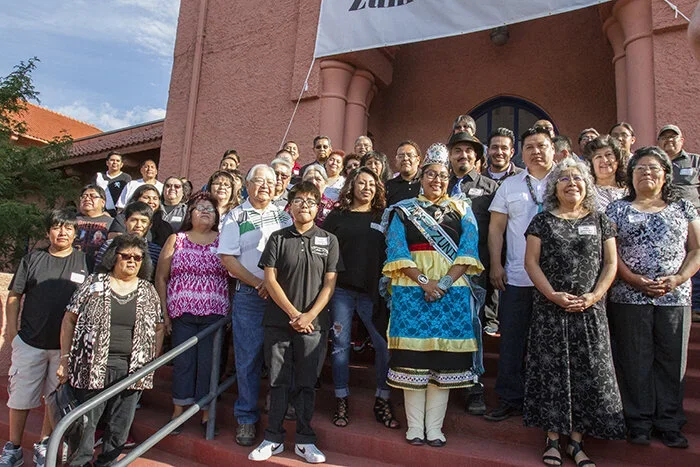
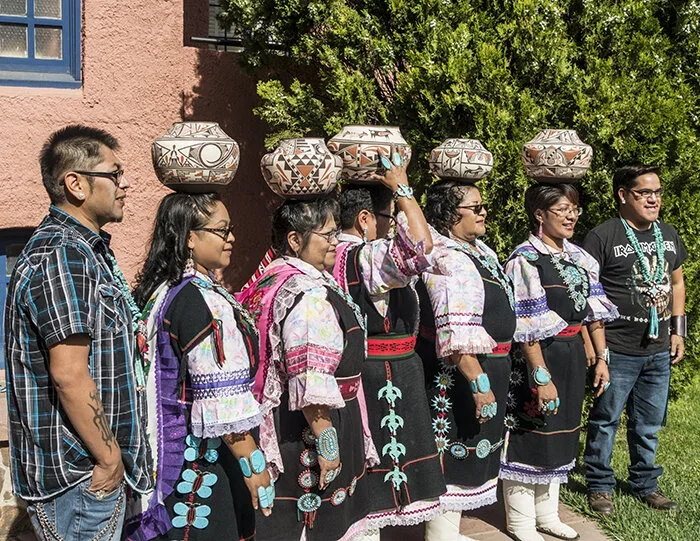

Zuni are A:shiwi
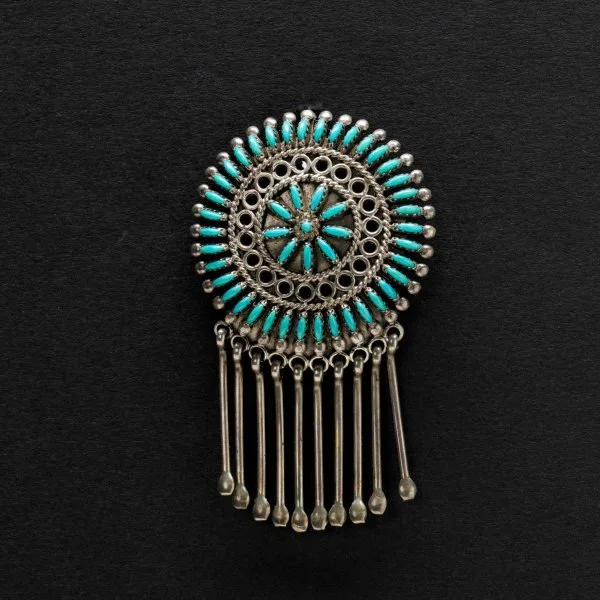
Zuni is the largest of the pueblos, comprising an area the size of Rhode Island. Located some four hours from Santa Fe, the Zuni Pueblo is home to about 11,000 people who speak their own language. It is estimated that 70 percent or more of the A:shiwi, as they call themselves, make the majority of their livelihood from the sale of their unique artwork, including their exquisite jewelry, distinctive pottery and highly collectible animal carvings sometimes referred to as fetishes.
The cultural and physical isolation of the Zuni helps preserve a strong connection to their traditional lifeways. The geographic separation of Zuni Pueblo may also partially explain their under‑representation at many broader Indigenous art events.
A great way to learn more about Zuni is to visit the Pueblo or at least experience their website. Before visiting in person, check out the Zuni Tourism website.
Courtesy of the A:shiwi A:wan Museum and Heritage Center website:
“The Zuni people have lived in the American Southwest for thousands of years. Their cultural and religious traditions are rooted, in large part, in the people's deep and close ties to the mountains, river ways, forests, and deserts of this ancient Zuni homeland. Primarily being farmers, the Zuni people raise maize and wheat and engage in Jewelry making. It has become an important additional source of income for the people. Traditional Zuni life is oriented around a matrilineal clan system and a complex ceremonial system base on a belief in the ancestors (ancient ones). There are six specialized esoteric groups, each with restricted membership and its own priesthood, devoted to the worship of a particular group of supernaturals. During the well-known Shalako Festival, held in early winter, dancers representing the couriers of the rain deities come to bless new homes.”